
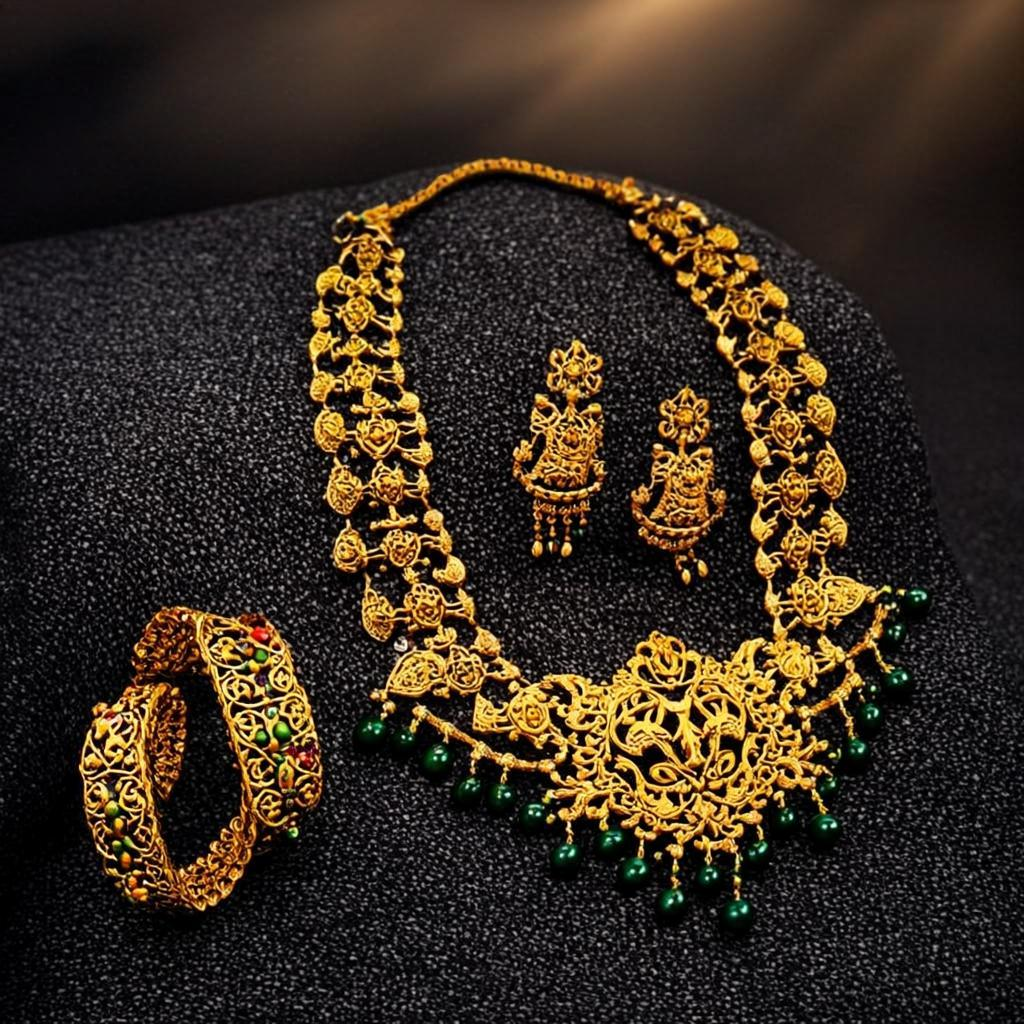
Temple jewellery, or "temple jewellery" as it is universally known, is perhaps the most iconic and culturally significant style of gold adornment in India. Born in the sacred spaces of South Indian temples, this style has transcended its religious origins to become the most coveted bridal jewellery aesthetic in the country. From the magnificent Lakshmi haar draped across a bride's chest to the delicate jhumkas that frame her face, temple jewellery represents a living tradition that connects modern Indian women to an artistic legacy stretching back over a thousand years. At DENI JEWELLERS, our temple jewellery collection is crafted by artisans who have inherited these techniques through generations, preserving the authentic spirit and craftsmanship of this sacred art form.
The Divine Origins: Jewellery of the Gods
The story of temple jewellery begins not with human adornment but with the decoration of deities in Hindu temples. In the great temples of South India — particularly those of Tamil Nadu, Andhra Pradesh, and Karnataka — the presiding deities were adorned with magnificent gold jewellery as part of daily rituals and special festival ceremonies. This practice, known as "alankara" (divine ornamentation), has been an integral part of temple worship since at least the Chola dynasty (9th-13th century CE), when temple construction and deity worship reached unprecedented heights of grandeur and sophistication.
The jewellery created for the gods was crafted by highly skilled artisan families known as "sthapathis," who held hereditary positions within the temple hierarchy. These artisans used techniques like repousse (hammering gold from the reverse side to create raised designs), granulation (attaching tiny gold beads to create textured patterns), and filigree (twisting fine gold wires into delicate lacy designs) to create pieces of extraordinary beauty and detail. The motifs were drawn directly from Hindu iconography — Lakshmi seated on a lotus, dancing figures of Shiva as Nataraja, mythical yalis (composite beasts), and intricate floral patterns inspired by the temple architecture itself. Because this jewellery was made for the gods, no expense was spared in its creation, and the quality and artistry achieved set the standard for all subsequent temple jewellery.
The Chola Dynasty: The Golden Age of Temple Jewellery
The Chola period (848-1279 CE) is widely regarded as the golden age of South Indian art, architecture, and jewellery. Under the patronage of powerful Chola rulers like Rajaraja Chola I and Rajendra Chola I, temples like the Brihadisvara Temple in Thanjavur became repositories of extraordinary wealth and artistic achievement. The Chola kings donated vast quantities of gold and precious stones to the temples, and the jewellery created during this period established the design vocabulary that defines temple jewellery to this day.
Key innovations of the Chola period include the development of the Lakshmi coin pendant (kasu malai), where gold coins featuring the goddess Lakshmi are strung together to form a necklace; the elaborate vanki (armlet) with its distinctive V-shape and deity motifs; and the grand oddiyanam (waist belt) featuring multiple panels of divine imagery. These forms have remained remarkably consistent over the centuries, a testament to the enduring power and beauty of the Chola aesthetic. The temple jewellery traditions established during the Chola era were so deeply embedded in South Indian culture that they survived successive dynasties, colonial rule, and the modernization of India, continuing to define the gold standard for bridal adornment.
From Temple to Bride: The Transition
The transition of temple jewellery from the exclusive domain of the gods to the adornment of brides is a fascinating cultural evolution. Historically, the Devadasis — women who were dedicated to temple service and performed ritual dances before the deity — were the first humans permitted to wear jewellery in the temple style. Their elaborate costumes, modelled after the ornamentation of the deities themselves, included all the classic temple jewellery pieces: the oddiyanam, vanki, jhumkas with mattal, and multiple layers of necklaces. When the Devadasi tradition influenced the development of Bharatanatyam as a classical dance form, the jewellery became an integral part of the dancer's costume.
Over time, the visual splendour of this temple-inspired jewellery captured the imagination of South Indian families, who began commissioning similar pieces for their daughters' weddings. The association with divinity made temple jewellery particularly auspicious for bridal wear — what could be more fitting for a bride than to be adorned in the same style as the goddess Lakshmi herself? This cultural shift transformed temple jewellery from a purely religious art form into the most prestigious style of wedding jewellery in South India, a position it holds to this day and one that has now spread across the entire country.
The Key Motifs and Their Meanings
Every element of temple jewellery carries deep symbolic meaning rooted in Hindu mythology and philosophy. Understanding these motifs enriches the experience of wearing and appreciating these sacred adornments, connecting you to centuries of cultural heritage and spiritual significance. Here are the most important motifs you will find in authentic temple jewellery:
Lakshmi Motif
The most prevalent and beloved motif in temple jewellery is Goddess Lakshmi, the deity of wealth, prosperity, and fortune. Lakshmi is typically depicted seated on a lotus throne, flanked by elephants pouring water from their trunks (the abhisheka or sacred bathing ceremony). This motif appears on necklaces, pendants, vankis, and oddiyanams, and wearing it is believed to invite the blessings of the goddess into the wearer's life. The Lakshmi motif is particularly important for bridal jewellery, as it symbolizes the wish for a prosperous and fortunate married life.
Yali (Vyala) Motif
The yali is a mythical composite creature that combines features of the lion, elephant, horse, and other animals. In temple architecture, yalis serve as guardians at the entrances and corners of temples, symbolizing protection and power. In temple jewellery, yali motifs appear on bangles, vankis, and necklaces, serving as a protective symbol that wards off negative energy. The dynamic, leaping form of the yali also represents courage and vitality, making it a powerful motif for important life events like weddings.
Lotus Motif
The padma (lotus) is one of the most ancient and universal symbols in Indian art and spirituality. Representing purity, beauty, and spiritual awakening, the lotus motif appears throughout temple jewellery in various forms — from the base of Lakshmi pendants to the decorative borders of oddiyanams and the central designs of jhumkas. The lotus's ability to bloom in muddy waters while remaining unstained makes it a powerful metaphor for spiritual purity amidst worldly existence, and its inclusion in temple jewellery adds a layer of philosophical depth to the aesthetic beauty.
Makara Motif
The makara is a mythical aquatic creature that serves as the vahana (vehicle) of the river goddess Ganga and the sea god Varuna. In temple jewellery, makara motifs typically appear as elaborate terminal pieces on waist belts and necklaces, where they add a sense of grandeur and mythological significance. The makara symbolizes the waters of creation and the power of the natural world, and its inclusion in a bridal set connects the wearer to the primordial forces of life and fertility.
The Crafting Techniques of Temple Jewellery
The creation of authentic temple jewellery requires mastery of several specialized goldsmithing techniques that have been passed down through generations of artisan families. These techniques demand extraordinary skill, patience, and artistic sensibility, and the resulting pieces are true works of wearable art that can never be replicated by machine production.
Repousse Work
Repousse is the defining technique of temple jewellery. The goldsmith works from the reverse side of a thin gold sheet, using specialized tools to hammer and press the metal into three-dimensional relief designs. For the Lakshmi motif, this means creating the goddess's form in high relief — her crown, facial features, the lotus she sits upon, and the flanking elephants all emerge from the flat gold surface with remarkable depth and detail. The skill required to execute fine repousse work is immense, as a single misstep with the hammer can ruin hours of painstaking labour. Master repousse artisans at DENI JEWELLERS can spend several days crafting a single Lakshmi pendant, ensuring every detail is rendered with the precision and artistry that this tradition demands.
Granulation
Granulation involves creating and attaching tiny gold beads (as small as 0.5mm in diameter) to the surface of the jewellery to create intricate textured patterns. These granules are arranged in rows, clusters, and decorative borders that add visual richness and a sense of opulent detail to the piece. Traditional temple jewellery uses granulation extensively on the borders of necklaces, the edges of Lakshmi pendants, and the decorative panels of oddiyanams. The technique requires extraordinary control over heat, as each tiny bead must be fused to the surface without melting it completely — a process that demands the steady hand and intuitive understanding of metal that comes only with decades of practice.
Kundan and Meenakari Integration
While Kundan (gem setting) and Meenakari (enamel work) are primarily associated with North Indian jewellery traditions, many contemporary temple jewellery pieces incorporate these techniques to create hybrid designs that blend the best of both worlds. Rubies, emeralds, and pearls are often set into temple jewellery using the Kundan technique, adding vibrant splashes of colour to the warm gold. Meenakari in rich red, green, and blue is sometimes applied to the reverse side of Lakshmi pendants and other pieces, creating a beautiful surprise when the jewellery is turned over. At DENI JEWELLERS, we offer both purely traditional temple jewellery and these gorgeous fusion pieces that honour the past while embracing the possibilities of contemporary craftsmanship.
Temple Jewellery in the Modern Era
The appeal of temple jewellery has never been stronger than it is today. In recent years, there has been a remarkable resurgence of interest in traditional Indian jewellery styles, driven in part by high-profile celebrity weddings, the global popularity of South Indian cinema, and a growing cultural pride among young Indian women who want to connect with their heritage through their personal style. Modern brides across India — not just in the South — are choosing temple jewellery as their wedding style, drawn by its regal grandeur, cultural significance, and the way it pairs beautifully with both traditional sarees and contemporary bridal lehengas.
At the same time, jewellery designers are finding innovative ways to make temple jewellery more accessible and versatile for everyday wear. Lightweight Lakshmi pendants, delicate jhumkas with miniature temple motifs, and slim bangles with yali designs allow women to carry a piece of this sacred tradition into their daily lives. These contemporary interpretations maintain the essential design vocabulary of temple jewellery while adapting the scale and weight for modern comfort and practicality. DENI JEWELLERS offers a wide range of temple jewellery from full bridal sets to everyday pieces, each one crafted with the same reverence for tradition and commitment to quality that has defined this art form for centuries.
"Temple jewellery is not just gold shaped into forms — it is devotion made tangible, heritage made wearable, and art that carries the prayers of generations." — DENI JEWELLERS
Caring for Your Temple Jewellery
Temple jewellery, with its intricate repousse work, delicate granulation, and often semi-precious stone settings, requires careful handling and proper maintenance to preserve its beauty for generations. Store each piece separately in a soft cloth pouch or a lined jewellery box to prevent pieces from scratching against each other. Avoid exposing temple jewellery to perfumes, hairsprays, or household chemicals, as these can dull the gold surface and damage any stone or enamel work. Clean your temple jewellery gently with a soft, dry cloth after each wear, and bring it to DENI JEWELLERS for professional cleaning and inspection at least once a year.
Pay special attention to the repousse elements, as the raised designs can accumulate dust and oils in their crevices over time. A very soft brush (such as a baby toothbrush) can be used to gently clean these areas, but never use abrasive cleaners or vigorous scrubbing. If your temple jewellery includes Kundan-set stones, be mindful that the foil backing behind the stones is delicate and can be damaged by moisture. With proper care, your temple jewellery will remain a treasured heirloom that can be passed down through your family for generations, each wearing adding another chapter to its story.
Explore Our Temple Jewellery Collection
Visit DENI JEWELLERS to discover handcrafted temple jewellery that honours centuries of tradition while embracing contemporary elegance.